

Spin Samurai casino Plinko game
Introduction
When I look at Spin samurai casino Plinko, I do not see just another quick casino distraction. I see a format built on a very simple visual idea that hides a much more nuanced playing experience underneath. A ball drops from the top of a pegged board, bounces left and right on its way down, and lands in a slot with a set multiplier. That is the entire concept on paper. In practice, though, Plinko can feel calm, tense, repetitive, exciting, frustrating, or oddly hypnotic depending on how the player sets the risk level and how the session unfolds.
That contrast is exactly why Plinko keeps attracting attention in Canada and beyond. It is easy to understand within seconds, but it does not behave like a classic slot, a table game, or a live casino title. At Spin samurai casino, the appeal of Plinko lies in this mix of transparency and uncertainty: the interface is clear, the board is visible, the multipliers are usually displayed up front, yet the outcome path still feels unpredictable on every drop.
For players who want to know whether this format is actually worth trying, the key question is not whether Plinko looks simple. It does. The more important question is what that simplicity means in real play. How fast does the session move? How much can the chosen risk mode change the results? Is it a casual low-pressure option, or can it become a high-variance experience very quickly? That is what I am going to break down here.
What Plinko really is and why it draws so much attention
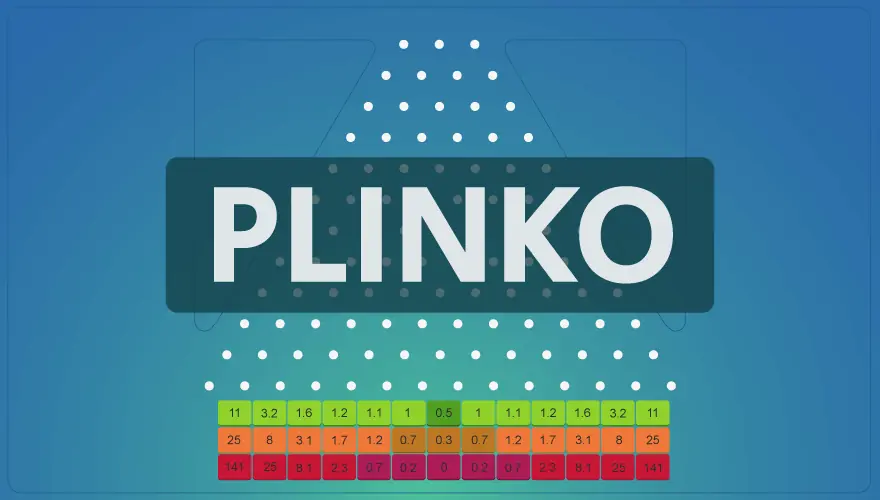
Plinko is a chance-based casino game built around a vertical board filled with pins. The player chooses a stake, often selects a risk setting, and drops one or several balls from the top. As each ball hits the pegs, it changes direction repeatedly before landing in one of the prize slots at the bottom. Each slot corresponds to a multiplier, and the final return depends entirely on where the ball finishes.
The reason this format became so visible is not hard to explain. First, it is visually readable. Even someone who has never played before can understand the broad idea immediately. Second, every round creates a mini-drama. The ball is always in motion, and that movement gives the player a few seconds of anticipation that feels very different from a slot reel stop. Third, Plinko compresses a lot of emotional contrast into a short cycle: many modest results, occasional misses or low multipliers, and the rare chance of a standout hit on the outer edges.
What makes Spin samurai casino Plinko especially interesting from an analytical point of view is that the game presents randomness in a visible way. In a slot, the random number generation happens behind the reels, and the player mainly sees the final symbol layout. In Plinko, the path itself becomes part of the experience. That does not make the outcome less random, but it changes how players perceive it. Many people feel more engaged because they can watch the journey, not just the result.
There is also a psychological reason for the game’s traction. Plinko offers the illusion of simplicity without the passivity of a basic instant-win title. You are not making deep strategic decisions, but you are still choosing stake size, board depth in some versions, number of balls, and risk profile. Those small decisions create a sense of involvement. They do not remove chance, yet they shape the tone of the session in a meaningful way.
How the Plinko mechanism works in practical terms
At its core, the mechanism is straightforward. You place a bet, release a ball, and the ball falls through a field of pegs. Every collision nudges it left or right until it reaches one of the bottom slots. The slot determines the multiplier applied to your stake. If the ball lands in a low-value area, the return is modest or sometimes below the original bet. If it reaches one of the rarer high-multiplier zones, the round can produce a much larger result.
What matters in practice is that the board is not arranged to give equal value across all landing positions. In most Plinko versions, the center slots appear more often and usually carry smaller multipliers, while the outer slots are harder to hit and therefore tend to hold the biggest returns. That creates a familiar distribution curve: common middling outcomes and infrequent premium results.
Players often underestimate how much the risk setting changes the feel of the board. The game may still look the same, but the payout map shifts. Lower-risk modes usually flatten the reward structure, which means more frequent moderate returns and fewer extreme multipliers. Higher-risk modes widen the gap between common results and rare top-end outcomes. This is where two people can play what appears to be the same Plinko board and walk away with completely different impressions of the game.
| Element | What it does | Why it matters to the player |
|---|---|---|
| Stake size | Sets the value of each drop | Directly controls bankroll pressure and session length |
| Risk level | Changes the multiplier distribution | Alters how often small returns appear versus rare large hits |
| Board path | Determines the route of the ball | Creates visible suspense but does not create player control |
| Bottom slots | Assign final multipliers | Define the actual result of the round |
One observation I think many players only understand after a few sessions is this: the ball’s zigzag movement feels expressive, but it should not be mistaken for influence. Watching the ball nearly reach a high multiplier and then bounce away can feel personal, almost as if the round “almost happened.” In reality, that feeling is part of the presentation. It adds tension, but it does not mean the player was close in any skill-based sense.
Where the excitement comes from and how the pace feels during a session
Plinko’s rhythm is one of its defining strengths. A single drop is short, readable, and emotionally compact. You do not need to wait through long animations, bonus intros, or rule-heavy transitions. That makes the format accessible for players who want immediate feedback. At the same time, this quick cycle can accelerate spending if the player starts dropping balls rapidly without tracking results.
In a real session, the tempo depends on how the player uses the interface. Manual drops create a more deliberate pace. Auto-play or repeated quick drops turn the board into a stream of outcomes, which can become absorbing very fast. This is one of the more important practical points: Plinko can look calmer than a slot because the visuals are cleaner, but the betting rhythm can actually become faster and more intense.
I would describe the emotional cadence of Plinko as “short suspense, quick resolution, repeated often.” That is very different from the structure of many slots, where tension builds around bonus triggers, scatter counts, or feature rounds. In Plinko, almost all the drama is concentrated into the descent itself. There is no elaborate second layer waiting to unlock. If a player enjoys immediate outcome cycles, that is a plus. If they prefer long-form build-up and feature variety, Plinko may feel too narrow after a while.
Another memorable detail is that Plinko often creates a strange split between what the eyes see and what the bankroll feels. A board full of bouncing balls can look entertaining even during a losing stretch. That can soften the perception of decline and make it easier to overlook how a session is actually going. For that reason alone, it helps to treat Plinko as a numbers game first and a visual spectacle second.
Risk levels, probability patterns, and who should be cautious
If I had to name the single most important thing to understand before launching Plinko at Spin samurai casino, it would be this: the risk setting is not a cosmetic option. It is the setting that most strongly shapes the session. Players who ignore it and focus only on the top multiplier are likely to misunderstand the game.
Lower-risk Plinko tends to produce a steadier flow of small or medium returns. That does not guarantee profit, of course, but it usually creates a smoother session with fewer dramatic swings. High-risk Plinko does the opposite. It often leads to long stretches of underwhelming results, punctuated by the possibility of an outsized hit. The attraction is obvious, but so is the danger: many players overestimate how often those top multipliers appear.
Probability in Plinko is best understood as distribution rather than prediction. You cannot forecast where the next ball will land with any reliability. What you can understand is the general structure: central outcomes are more common, edge outcomes are rarer, and the payout table reflects that. The game is not hiding this logic, but players still need to internalize what it means. A huge multiplier on the edge of the board is there precisely because it is difficult to reach consistently.
- Low-risk mode usually suits players who want longer sessions and less violent bankroll movement.
- Medium-risk mode can appeal to those looking for some variation without pushing too far into extreme swings.
- High-risk mode is mainly for players who accept that many drops may return little before a rare standout result appears.
For Canadian players trying Spinsamurai casino Plinko for the first time, my advice is simple: do not judge the game by a handful of drops. This format can create misleading early impressions. A few decent landings may make the board seem generous. A cold opening may make it seem dead. Neither tells you much on its own. The better approach is to look at the risk profile, the multiplier spread, and your own tolerance for variance before deciding how much time or money to put into it.
What the player should understand about outcomes before pressing start
Plinko is often marketed through its biggest possible multipliers, but that is only one part of the picture. The more useful question is how the full range of outcomes behaves over time. In many versions, the board is designed so that the most common landing areas return low multipliers, sometimes below break-even. This means a session can drain gradually even when the player is landing “something” on most drops.
That detail matters because frequent small returns can create a false sense of stability. A player may feel that the game is paying often, yet the overall balance can still move downward. This is one of the less obvious traits of Plinko: visible activity and regular minor returns do not necessarily translate into sustainable results.
Here is a practical way to think about it. If you choose a high-risk layout because you are chasing a top multiplier, you are effectively accepting a lower hit comfort level in exchange for upside. If you choose a lower-risk layout, you are reducing the emotional peaks but often making the session easier to read and manage. Neither choice is objectively right. It depends on whether the player values longevity, excitement, or the possibility of a rare spike.
| Session trait | Lower-risk setup | Higher-risk setup |
|---|---|---|
| Result pattern | More stable, more modest | More uneven, more extreme |
| Bankroll movement | Usually smoother | Can swing sharply |
| Emotional feel | Controlled and steady | Tense and swing-heavy |
| Best suited for | Players who prefer longer play | Players comfortable with dry spells |
One more point deserves emphasis. The visible path of the ball can tempt players into believing in streak-reading. After several central landings, some start expecting an edge result. After a large multiplier, others assume the board has “cooled off.” That thinking does not help. Plinko is one of those formats where pattern-hunting is especially seductive because every outcome is animated in front of you. The board tells a story with motion, but the math does not become more predictable because the story looks vivid.
How Plinko differs from slots and other casino formats
The easiest comparison is with classic slots, because many players arrive at Plinko expecting a similar experience. In reality, the difference is substantial. Slots are built around reels, payline logic, symbol combinations, and often bonus rounds. Their entertainment value frequently depends on layered features, real money free spins inside Spin Samurai Casino, multipliers, wilds, and evolving reel states. Plinko strips almost all of that away.
Instead of symbol reading, Plinko is about trajectory and landing position. Instead of waiting for a bonus trigger, the entire event happens in front of you during the drop. Instead of feature depth, the game relies on repetition, pace, and payout distribution. That makes it cleaner and easier to grasp, but also less varied in the long run.
Compared with table games, Plinko is also quite different. It does not ask for rules knowledge like blackjack, Spin Samurai Casino poker page with bonus terms and account details, or baccarat. There is no strategic decision tree once the drop begins. The player’s role is mostly in setup rather than execution. For some, that is exactly the attraction. For others, it removes too much agency.
Against crash games details and instant-win formats, Plinko sits somewhere in the middle. Like a crash game, it can deliver quick rounds and high emotional peaks. Like an instant title, it is easy to enter. But Plinko’s visual descent gives it a more theatrical feel than either. It turns a random result into a brief performance, and that performance is a major part of why the format stands out.
Strengths and weak points that matter in real play
There is a lot to like about Plinko when it is approached with clear expectations. The interface is usually intuitive, the rounds are quick, and the rules can be understood almost immediately. It is one of the few casino formats where a new player can see the core logic without reading a long help page. That accessibility is a genuine strength, not a marketing talking point.
Another strong point is the clarity of session identity. With slots, players sometimes need time to understand whether a title is bonus-heavy, dead-spin prone, or built around long dry stretches. Plinko tends to reveal its personality faster. Once you choose the risk level and see the multiplier map, you already have a fairly good sense of what kind of ride you are choosing.
Still, the format has clear limits. The first is repetition. Because the structure is so stripped down, some players lose interest once the novelty of the falling ball wears off. The second is the potential for rapid bankroll erosion, especially when quick-fire drops are combined with ambitious risk settings. The third is psychological: Plinko can make randomness feel more “interactive” than it really is, which may encourage overconfidence or emotional chasing.
- Main strengths: easy entry, fast rounds, visible outcome logic, flexible risk style.
- Main limitations: limited depth, repetitive loop, and a tendency to disguise volatility behind a simple presentation.
If I had to sum up the practical trade-off in one sentence, it would be this: Plinko offers instant clarity, but not necessarily lasting variety. Whether that feels efficient or shallow depends entirely on the player’s taste.
What to check before launching Spin samurai casino Plinko
Before starting a session, I would pay attention to a few very specific things. First, inspect the multiplier layout rather than only the maximum number on the board. A giant top prize means little if the surrounding distribution is punishing and your bankroll is limited. Second, choose the risk level intentionally. Do not treat “high” as the default just because it looks more exciting on paper.
Third, decide how fast you want to play. Plinko can become deceptively quick, especially when repeated drops are enabled. Setting a pace is not glamorous advice, but it is practical. A slower manual rhythm gives the player more time to create a real money account at Spin Samurai Casino what is happening financially, not just visually.
Fourth, if a demo mode is available, use it to understand the board’s feel. Not because it will reveal a secret pattern, but because it helps you see whether the game’s tempo and structure actually suit you. Some players discover within minutes that they enjoy the short suspense loop. Others realize they miss the layered progression of slots or the decision-making of table games.
Finally, think honestly about why you are opening Plinko in the first place. If you want a straightforward, watchable, quick-resolution game with adjustable intensity, it can be a strong fit. If you want narrative features, strategic input, or a long arc of evolving play, you may be better served elsewhere.
Final verdict on Spin samurai casino Plinko
Spin samurai casino Plinko offers something very specific: a clean, fast, visually engaging chance game built around visible movement and adjustable variance. Its biggest strength is not complexity, but clarity. You can understand the setup quickly, see the board logic in front of you, and choose a playing style that is either steadier or more aggressive depending on the risk setting.
That said, the game deserves a realistic reading. The simple interface should not be confused with low exposure. On higher settings, Plinko can become a sharp swing game with long stretches of modest returns and occasional spikes that do not arrive nearly as often as the top multiplier suggests. The suspense is real, but so is the possibility of rapid losses if the pace gets away from you.
Who is it for? In my view, Plinko suits players who enjoy short rounds, immediate feedback, and a transparent format that does not hide behind complicated bonus systems. It is less suitable for those who want strategic decision-making, richer feature depth, or a more varied long-session structure. For some, that directness is refreshing. For others, it becomes repetitive quickly.
My bottom-line assessment is simple. Plinko at Spin samurai casino is worth trying if you want a compact, high-visibility casino experience where the tension comes from the drop itself. Just go in with the right expectations: the board is easy to read, but the outcomes can still be harsh; the rounds are short, but the swings can be meaningful; and the game’s biggest appeal lies in how much suspense it creates from such a bare framework. That balance is exactly why some players keep coming back to it, while others move on after a brief experiment.
FAQ
Before the first ball drop, which settings should be checked so the round behaves as expected?
Check the selected stake, the number of planned drops, and the active mode shown near the game controls. Also confirm whether the round will use demo mode or real-money play before starting.
How does a Plinko round work step by step when using multipliers?
A ball is released from the top, then it bounces off pegs and falls through numbered slots. The slot it lands in determines the multiplier for that round, and the payout is calculated from the selected stake.
Can Plinko be played for real money immediately, or is demo mode required first?
Real-money play is available once the account is accessible and the game is launched in the proper mode. Demo mode is a separate option for practicing ball drops and multipliers without using funds.
Which volatility level or risk setting matters most in Plinko?
Risk level influences how frequently higher multipliers appear and how the outcomes can cluster over multiple drops. Lower risk may feel steadier, while higher risk can produce bigger swings.
I am seeing an error when signing in, and the Plinko lobby keeps loading—what should be checked?
Verify the login method and credentials, then try again after clearing browser cache or reconnecting the mobile network. If two-step verification is enabled, complete it before returning to the Plinko game lobby.
If the current mirror is not working, how can a player switch to a working mirror to access Plinko?
Use the alternative mirror option provided by the site when the current address fails. After switching, log in again if the session was interrupted, then relaunch Plinko from the games lobby.
What nearby casino games should be considered when enjoying Plinko-style multipliers and quick rounds?
Crash games and other fast multiplier formats are the closest matches in pace. Live casino tables can feel different because outcomes come from a dealer table rather than peg-based ball drops.
What common beginner mistake causes confusion in Plinko controls?
Selecting the wrong mode and starting real-money stakes when the interface still indicates demo mode. Another common issue is changing the stake mid-session instead of waiting until the round completes.